
Disclosure: HearingPilot may earn a commission from qualifying purchases. Our editorial guidance is independent. Learn more.
Updated September 2026 · Medically educational, not personal medical advice
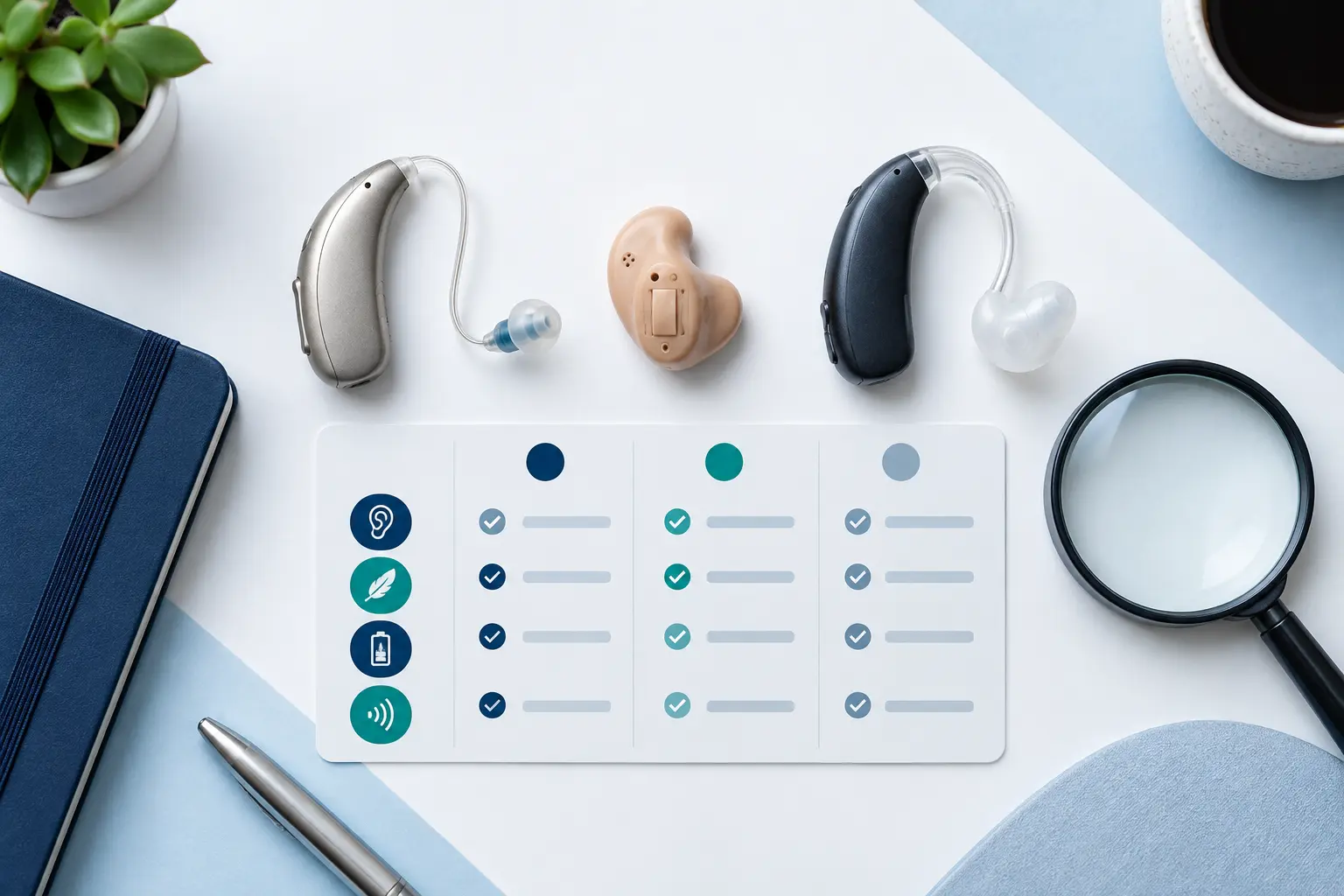
Hearing aids come in several physical styles. The main tradeoffs are visibility, power, battery size, comfort, ease of handling, microphone location, and suitability for the ear and hearing profile.
Behind-the-ear (BTE)
A case sits behind the ear and sends sound through tubing to an earmold or dome. BTE devices can accommodate a wide range of needs, offer room for larger controls and batteries, and are often easier to handle. They may be more visible than smaller styles.
Receiver-in-canal (RIC or RITE)
The microphones and processor sit behind the ear, while a thin wire leads to a receiver in the ear canal. RIC designs are popular because they are discreet, flexible, and can provide a natural open feeling for some users. The receiver needs protection from earwax and moisture.
In-the-ear (ITE)
ITE devices place the electronics in a shell that fills part or most of the outer ear. Their larger surface can make controls and batteries easier to manage than tiny canal models. A custom shell may improve stability but is more visible.
In-the-canal and completely-in-canal
ITC devices sit partly in the canal; CIC models fit more deeply. They can be discreet, but the small size may be difficult for people with limited dexterity or vision. Battery life, microphone space, and wireless features may also be more limited.
How to choose a style
Consider hearing needs, ear anatomy, comfort, glasses, phone use, hand control, vision, wax production, moisture exposure, and charging preference. Style alone does not determine sound quality. A trial period is the most reliable way to evaluate everyday comfort.
Quick comparison
| Style | Typical strength |
|---|---|
| BTE | Easy handling and broad fitting range |
| RIC/RITE | Discreet and flexible |
| ITE | Larger controls and custom fit |
| ITC | Smaller appearance |
| CIC | Very discreet |
Frequently asked questions
Which type is best for glasses?
Many people use BTE or RIC devices with glasses successfully, but behind-ear space and comfort vary. Try the combination before the return period ends.
Which type is easiest for older hands?
Larger BTE or ITE designs and rechargeable docks are often easier to handle than tiny canal devices.
Does a smaller aid sound better?
Not necessarily. Performance depends on fitting, processing, microphones, hearing needs, and environment—not size alone.
Trusted sources
Continue your research with our buying guides, comparisons, and transparent review process.