
Disclosure: HearingPilot may earn a commission from qualifying purchases. Our editorial guidance is independent. Learn more.
Updated September 2026 · Medically educational, not personal medical advice
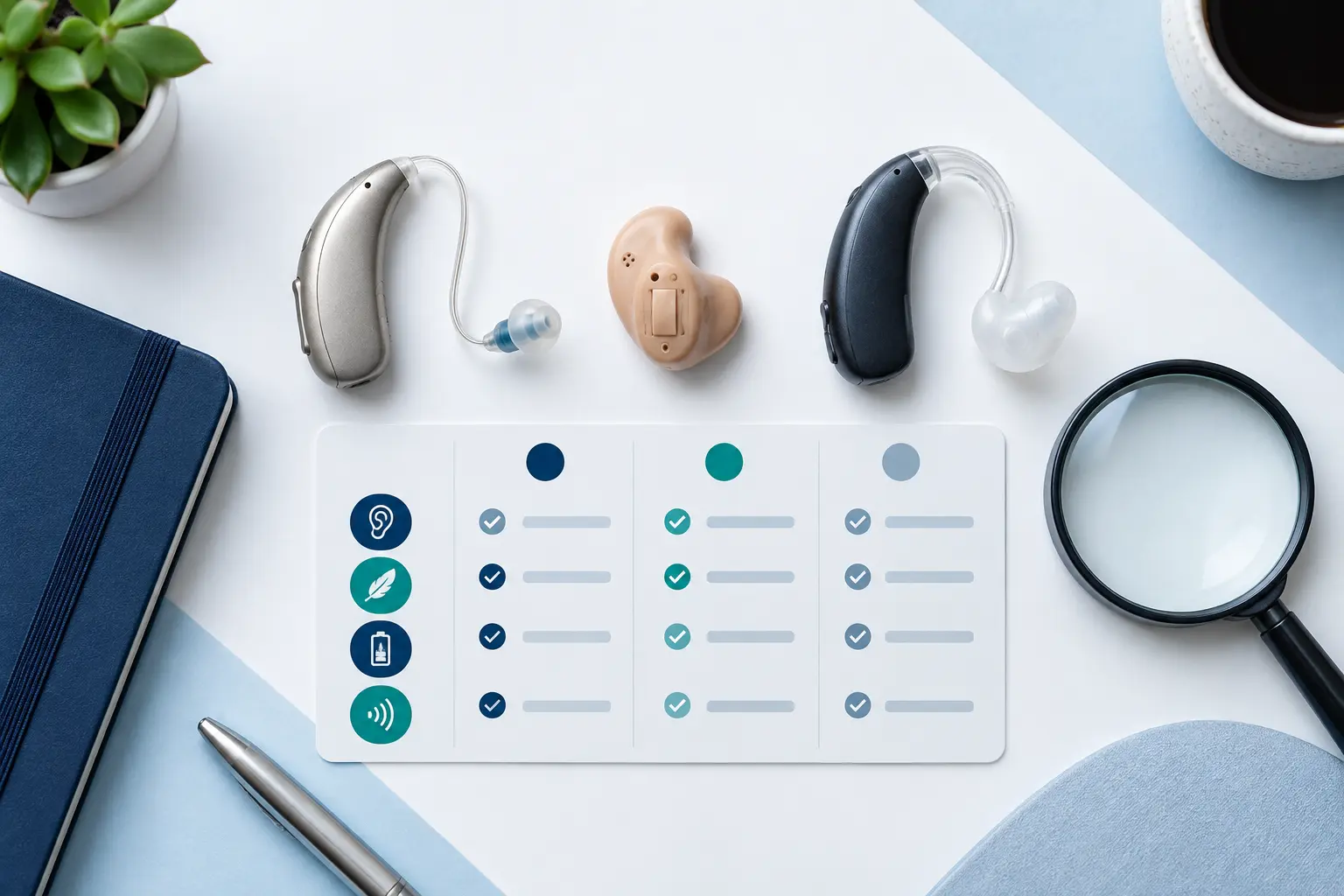
OTC and prescription hearing aids are both medical devices, but they serve different users and come with different fitting, support, and care pathways.
The short answer
OTC hearing aids are for adults 18 and older with perceived mild to moderate hearing loss and do not require a prescription or medical exam. Prescription hearing aids can be fitted for people of any age and for any degree of hearing loss, with care from a licensed hearing professional.
OTC pathway
The buyer selects, fits, and adjusts the device, sometimes with app-based screening and remote support. OTC can offer faster access and more price choice. It works best for adults who are comfortable following setup instructions and whose needs fall within the intended range.
Prescription pathway
A professional evaluates hearing, ear health, communication needs, and device fit. Prescription technology may offer broader power, custom earmolds, specialized programming, verification, and ongoing in-person care. This route is especially important for complex or significant hearing loss.
When professional care should come first
Seek care for sudden or rapidly worsening hearing loss, a large difference between ears, ear pain, drainage, persistent dizziness, visible blockage, or hearing loss that interferes strongly with daily safety. Children should not use OTC hearing aids.
Making the decision
Choose based on eligibility, complexity, support needs, budget, and confidence with self-fitting. OTC is not automatically inferior and prescription is not automatically excessive. The best route is the one that safely matches the person and the hearing problem.
Quick comparison
| Factor | OTC |
|---|---|
| Age | Adults 18+ |
| Intended loss | Perceived mild to moderate |
| Medical exam | Not required |
| Fitting | Self-fitting or supported |
| Support | Varies by seller |
| Customization | Varies |
Frequently asked questions
Can I switch from OTC to prescription?
Yes. If an OTC device does not provide enough benefit, a hearing evaluation can clarify whether prescription care or another solution is appropriate.
Are PSAPs the same as OTC hearing aids?
No. PSAPs are not medical devices and are intended for people with normal hearing in certain environments.
Does either type restore normal hearing?
No. Hearing aids improve access to sound but do not restore normal hearing.
Trusted sources
Continue your research with our buying guides, comparisons, and transparent review process.